Commercial Caulking & Joint Sealing · Since 1993
Commercial Caulking Expansion Joints, Window Perimeters, Control Joints
Expansion joints, window perimeters, and control joints need flexible sealant, not mortar. When caulk fails, water enters at the most vulnerable points in the building envelope. Arrow identifies and seals every penetration point.
The Basics
Commercial Caulking Services: Sealing Movement Joints on Chicagoland Buildings
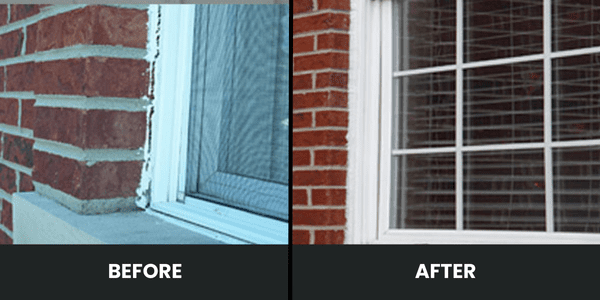
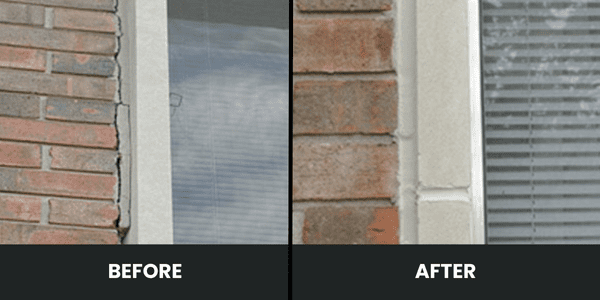
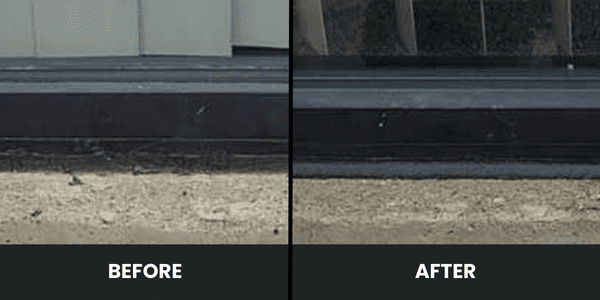
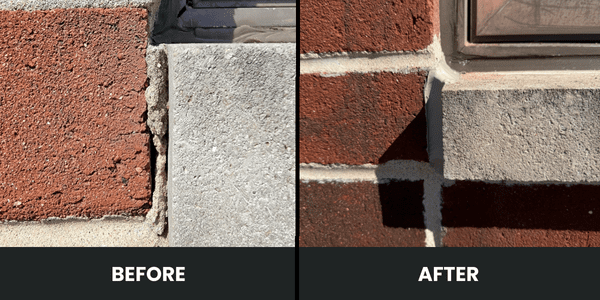
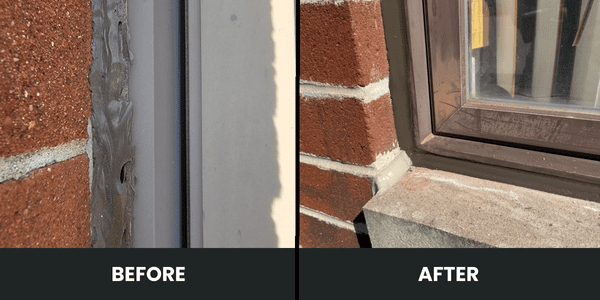
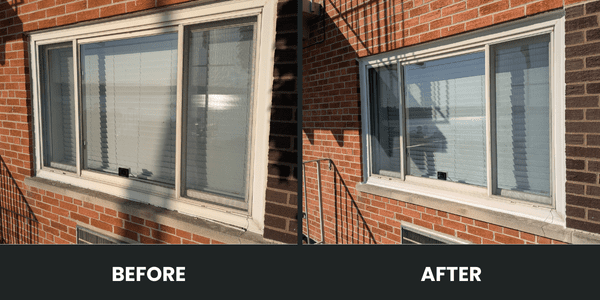
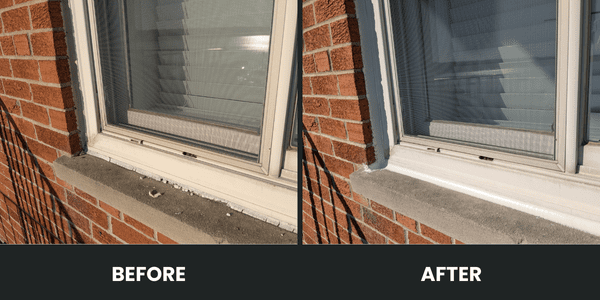
Arrow's commercial caulking service applies flexible sealant at joints designed to accommodate building movement or bridge dissimilar materials that mortar cannot bond to. Caulking seals the parts of the Chicagoland building envelope that tuckpointing does not: expansion joints, control joints, window and door perimeters, transitions where masonry meets metal flashing or roofing, and joints at parapet caps and roof-to-wall interfaces on multi-unit residential, commercial storefront, and industrial masonry buildings across Cook, Lake, and DuPage Counties.
The Chicago-area climate is uniquely hard on commercial sealants. Roughly one hundred freeze-thaw cycles per year drive wall movement across every expansion and control joint, and lake-effect humidity and temperature swings compound the range of motion the sealant has to accommodate. Caulking that was correct for a mild climate fails on Chicagoland suburb commercial storefronts and industrial facades within a fraction of its rated service life.
Arrow is licensed, insured, and bonded for commercial caulking throughout the Chicago metro, backed by over fifty years of combined masonry expertise. Caulking failure is one of the most overlooked sources of interior water damage on Chicagoland commercial buildings, and many sudden water intrusion issues on otherwise sound structures trace back to caulking that quietly failed years earlier at a window perimeter, control joint, or roof transition.
The Work
Arrow's Caulking Approach: Complete Removal, Backer Rod, Correct Sealant
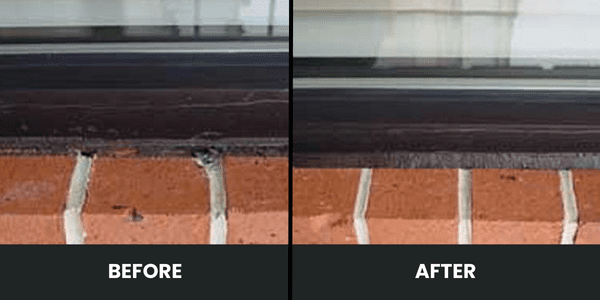
Tuckpointing addresses mortar joints between masonry units. Caulking addresses movement joints, transitions between masonry and other materials, and any joint that the building was designed to flex over time. Using mortar in a movement joint on a Chicagoland commercial storefront causes immediate cracking under freeze-thaw movement; using caulk in a mortar joint fails through weathering. Arrow identifies joint type and substrate before specifying the sealant product.
Arrow completely removes existing failed sealant before new sealant is applied. Not scraped, not covered, not partially cut back. Substrate surfaces are cleaned to sound material. Caulking over existing sealant is the single most common shortcut in the industry and the fastest reason a new caulking scope on a Chicagoland industrial or commercial building fails within a few years despite using correct materials.
Backer rod is installed to the correct depth to control the sealant into the correct hourglass profile at the specified width-to-depth ratio. Polyurethane sealants are applied at structural and movement joints; silicone sealants are used at glass-to-metal interfaces and in high-UV locations. Product selection is matched to Chicagoland exposure conditions, not to whatever is fastest to load into the gun.
Get a Free EstimateCustom Mortar Matching
Color-sampled and blended for every project before work begins.
Written Scope
Every job includes a written specification before work starts.
Job-Specific Warranty
Every contract includes a written guarantee on the work.
Warning Signs
Signs Your Caulking Needs Replacement
Visible Cracks or Splits in the Sealant
Sealant that has cracked, split, or checked has lost elasticity and is no longer forming a weather seal. Cracks let water pass directly through what should be a sealed joint.
Sealant Pulling Away from the Substrate
Adhesion failure where the sealant has separated from the masonry, window frame, or metal surface it was applied to. Even hairline separation admits water and typically progresses to complete failure within a season or two.
Hardening or Loss of Flexibility
Sealant that has become hard, brittle, or unresponsive to a fingernail test is past service life. Building movement will crack it in the next freeze-thaw cycle even if it looks intact today.
Sealant Shrinkage or Pulling Away at Ends
Sealant that has visibly retracted from the joint width it originally filled has lost material and can no longer bridge the movement it was designed to accommodate.
Interior Water Entry at Window and Door Openings
Water staining, blistering paint, or mold on interior wall surfaces immediately adjacent to windows and doors is usually a caulking failure at the exterior perimeter, not a window or door problem.
Our Process
The Arrow Caulking Process: Three Phases
Every Arrow caulking project runs through three phases. Phase one, complete removal of existing sealant, is what determines whether the finished job lasts twenty years or five on a Chicagoland exposure elevation.
-
01
Phase 1: Joint Inspection and Complete Removal of Existing Sealant
Every joint is identified by type (expansion, control, perimeter, transition) and substrate materials, and the correct sealant product is specified for each. Failed sealant is fully removed to sound substrate. This is where most re-caulking scopes on Chicagoland commercial storefronts and industrial buildings fail, since new sealant does not bond to old sealant; it bonds to the original substrate. Skipping this step guarantees premature failure regardless of product quality.
-
02
Phase 2: Backer Rod Installation and Sealant Application
Backer rod is installed to control the depth of the sealant and force the correct hourglass profile at the specified width-to-depth ratio. Polyurethane sealant is applied at structural and movement joints; silicone is used at glass-to-metal interfaces and high-UV locations where polyurethane would degrade. Application is tooled to eliminate voids and ensure full adhesion to both substrate surfaces of the joint.
-
03
Phase 3: Cure Verification, Cleanup, and Documentation
Cure schedule is verified before the joint is exposed to weather. Adjacent surfaces are cleaned of any sealant residue before it fully cures on the substrate. Documentation photographs are taken for the property manager or board file, and the client is walked through the specific joints scoped, so the next inspection cycle on the Chicagoland property is straightforward to plan.
Why It Matters
Failed Caulk Is the Most Overlooked Source of Water Entry
Tuckpointing Alone Does Not Seal the Building Envelope
Tuckpointing addresses mortar joints. But window perimeters, control joints, and expansion joints are sealed with caulk, not mortar. Caulk has a shorter service life than mortar and fails first. Many water intrusion complaints that appear to be masonry failures are actually caulk failures at window perimeters or expansion joints.
Arrow Evaluates Both During Every Inspection
A building that has recently been tuckpointed can still have significant water entry if the window perimeter caulking was not included in the scope. Arrow makes this clear before any work begins and provides a caulking assessment alongside every tuckpointing inspection.
We Start With What Actually Needs Fixing
Large projects get broken into priority lists. Critical work comes first. Arrow does not write the biggest possible scope to maximize the invoice. The written scope explains what is essential now and what can wait.
Lifespan & Longevity
How Long Does Commercial Caulking Last?
Commercial-grade polyurethane and silicone sealants typically last fifteen to twenty-five years depending on joint type, exposure, and application quality. Structural and expansion joints on high-exposure elevations trend toward the shorter end of that range; sheltered window perimeters and control joints trend toward the longer end.
The single largest factor determining service life is whether old sealant was fully removed before new sealant was applied. Caulking installed over previously failed sealant, or into joints with contaminated substrates, commonly fails in five to ten years regardless of the product used. Correctly executed applications routinely deliver full expected service life.
Reapplication should be scoped when visible sealant failure appears on any joint, or as part of a broader building maintenance cycle every fifteen to twenty years. Waiting for interior water damage to appear before rechecking exterior caulking is not a maintenance strategy; it is a repair budget forecast.
Common Questions
Commercial Caulking FAQs
What is the difference between caulking and tuckpointing?
Tuckpointing repairs mortar joints between masonry units. Caulking seals movement joints and transitions between dissimilar materials (window frames, metal flashing, expansion joints, control joints). They address different joint types with different materials; a building envelope needs both, and one cannot substitute for the other.
How often does commercial caulking need to be replaced?
Every fifteen to twenty-five years for correctly installed applications. Caulking installed as a shortcut over previously failed sealant may need replacement in five to ten years. Visible cracking, shrinkage, or adhesion failure is a signal for replacement regardless of age.
Why does old sealant need to be fully removed before applying new caulk?
New sealant does not bond to old sealant. It bonds to the original substrate: masonry, metal, or window frame material. Applying new sealant over old creates a two-layer system in which the new material adheres only to the failing old material below it, and the entire system fails as soon as the old material lets go.
Can building owners do their own caulking?
Basic weatherstripping and minor cosmetic caulking on residential-scale interior work is straightforward. Commercial exterior caulking on expansion joints, control joints, and structural transitions requires substrate identification, correct sealant selection, backer rod sizing, and application at proper width-to-depth ratio. Substrate-incompatible or incorrectly sized applications fail early.
What product does Arrow use?
Polyurethane sealants for structural and movement joints; silicone sealants for glass-to-metal interfaces and high-UV exposure locations. Specific product selection depends on the joint type, substrate materials, and expected movement range. Arrow does not use interior-grade or residential-grade sealants on commercial exterior applications.
What Clients Say
Read All Reviews"Arrow did tuckpointing on our 40-unit building in Evanston. The mortar match was excellent. You honestly cannot tell where the old work ends and the new work begins. That was the most important thing for our board."
"We had a city citation and needed documentation fast. Arrow assessed the building, gave us a clear scope, and completed the work on schedule. The inspector signed off without any issues."
"I manage six buildings. Arrow is the only masonry contractor I call. They tell me what the building needs, not the most expensive thing they can do. That matters a lot when you're managing association budgets."
Ready to Get Started?
Free estimates for all projects. We serve property managers, condo associations, and building owners across Chicagoland.