Park Ridge, IL · Commercial Masonry Restoration
Arrow Masonry provides commercial tuckpointing, brick repair, and full masonry restoration for Park Ridge condo boards, property managers, and building owners. Serving the northwest suburbs since 1993, with over fifty years of combined field experience.
What We Do in Park Ridge
Failed mortar joints are the primary path for water into the wall assembly, and joint failure is often invisible from the street. As joints deteriorate, water infiltrates the wall assembly and damages sheathing, insulation, and framing long before visible failure appears at the surface. Arrow grinds each joint to a minimum three-quarter-inch depth before packing new mortar and color-matches every batch from a physical sample taken against the existing wall.
Tuckpointing ›Spalled, cracked, and displaced brick are water entry points, not cosmetic problems. Matching replacement brick is the harder half of the repair: brick from manufacturers no longer in production is sourced through salvage yards and regional brickyards, then hand-selected so face color, texture, and dimension read continuous with the original wall. Arrow tuckpoints the surrounding joints as part of every brick replacement so the repair reads as one restored section, not a visible patch.
Brick Repair ›When a Park Ridge building needs more than spot repairs, Arrow provides a full envelope assessment and a phased restoration plan. The assessment covers mortar joints, brick and stone faces, lintels, sills, coping stones, parapet caps, flashing, and roof-to-wall transitions. Priorities are assigned by water-entry risk and structural urgency, so condo boards and property managers can fund critical work now and budget deferrable work over the next twelve to twenty-four months. Every scope includes a written specification suitable for lender review, insurance documentation, and reserve-study updates.
Masonry Restoration ›Every masonry window and door opening is supported by a lintel that carries the brick load above it. Arrow replaces failed lintels before the deterioration reaches the surrounding masonry; at the point of surface failure, a lintel replacement becomes an opening rebuild. Where original lintels can be preserved on historic buildings, Arrow coordinates rust removal, primer application, and reinstatement rather than automatic replacement.
Lintel Replacement ›Buildings across Cook County incorporate Indiana limestone, sandstone, cast stone, or granite in window surrounds, sills, water tables, and facade accents. Arrow handles both the stone repair and the surrounding masonry integration so restored sections read as continuous with the original facade. Dutchman repairs, pinning, and consolidation are used where full replacement is unnecessary; matched replacement stone is sourced from regional quarries and salvage yards when replacement is required.
Stone Restoration ›Deferred chimney repair almost always spreads inward as roof deck damage, attic water intrusion, or interior ceiling staining. Arrow handles crown repair and replacement, chimney cap installation, tuckpointing, flashing repair, and full chimney rebuilds. Chimney base flashing is inspected on every scope, not just the crown and joints.
Chimney Repair ›Panel brick construction uses two-to-four-inch thin brick applied to a concrete or steel frame, with an air cavity behind the panel. Arrow uses stainless-steel through-bolt anchors on panel repairs for a service life of 50 years or more, and preserves the air cavity and weep holes that panel systems require to drain properly.
Panel Brick Repair ›Local Context
Cook County and most incorporated Cook County municipalities require permits for structural masonry work, tuckpointing above a height threshold set by local ordinance, and any lintel or parapet-wall work. Permit applications require licensed contractor documentation, workers' compensation insurance, and general liability certificates. Arrow is licensed, insured, and bonded for all Cook County masonry work.
Mortar work requires ambient temperatures above 40 degrees Fahrenheit during placement and the initial twenty-four-to-forty-eight-hour cure. The regional climate reliably meets this threshold only from mid-April through early November. Emergency stabilization can be performed year-round with heated enclosures and mortar additives; scheduled maintenance work is planned in the standard working season.
Park Ridge's Historic Preservation Commission runs a formal 100-Year Home recognition program for residences reaching the century mark, which has surveyed hundreds of pre-1930 brick homes clustered around the Uptown Pickwick district.
Applications for exterior masonry work on buildings within these districts go through the Park Ridge Historic Preservation Commission. Arrow prepares material samples, mortar analyses, and scope documentation appropriate for landmark applications, and uses heritage-appropriate lime mortars and reversible techniques where the landmark scope requires them.
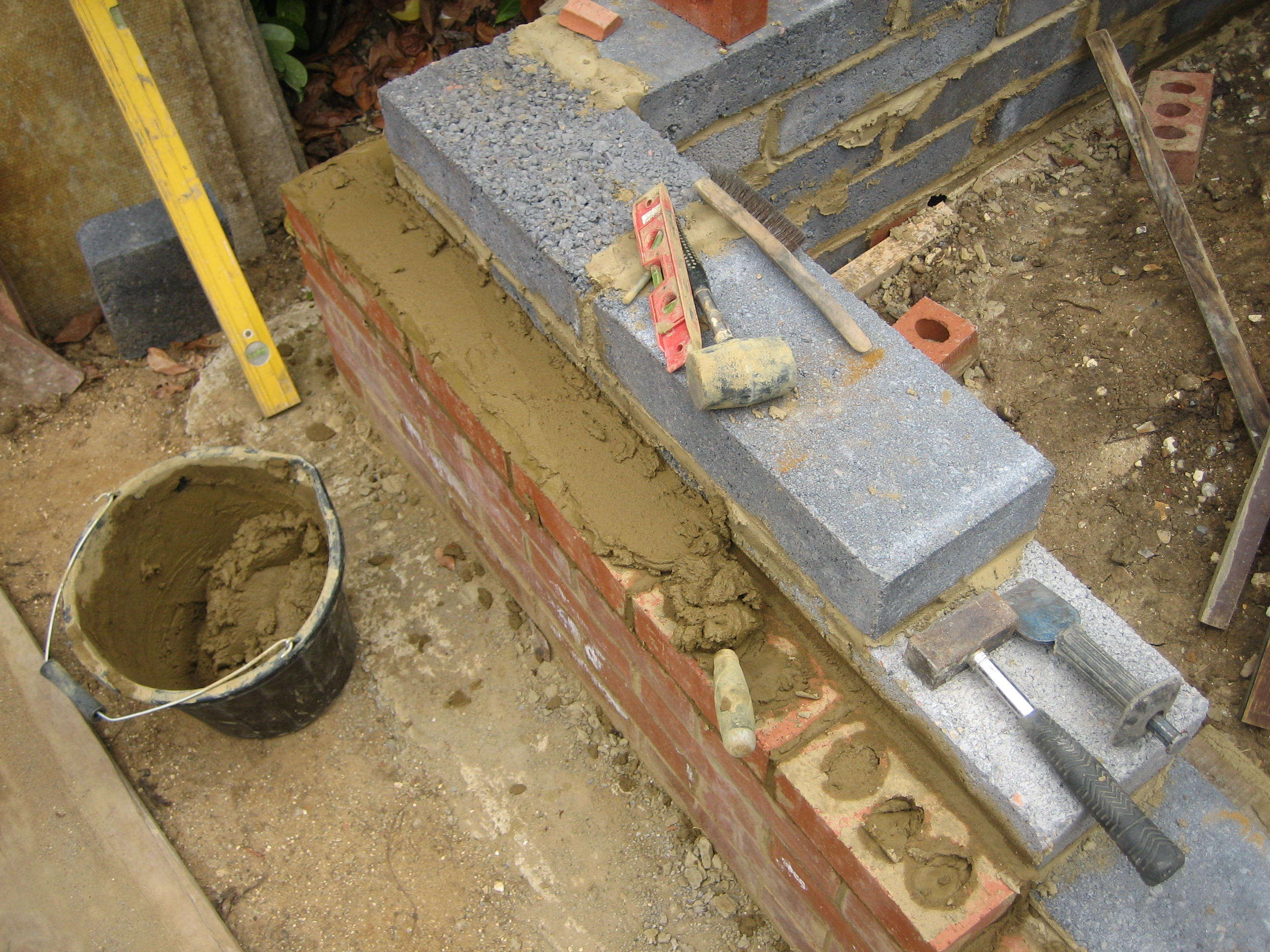
Arrow custom-blends mortar and samples it against the existing building before a single joint is filled. Completed repairs integrate into the facade instead of announcing themselves as patches.
Arrow separates critical repairs from work that can wait twelve to twenty-four months. Boards fund essential work now and budget secondary work in future cycles, without deferring what is structurally necessary.
Property managers are accountable to residents and boards. Arrow communicates schedule adjustments and scope changes in writing before they take effect, not after a crew fails to appear.
Full Service Capabilities
Arrow also helps property owners correct municipal code violations and failed facade inspections. Request a quote online 24/7 or call (847) 776-6400. Arrow can usually schedule an on-site inspection within 24 hours.
Free estimates for all projects. We serve property managers, condo associations, and building owners across Park Ridge and Cook County.