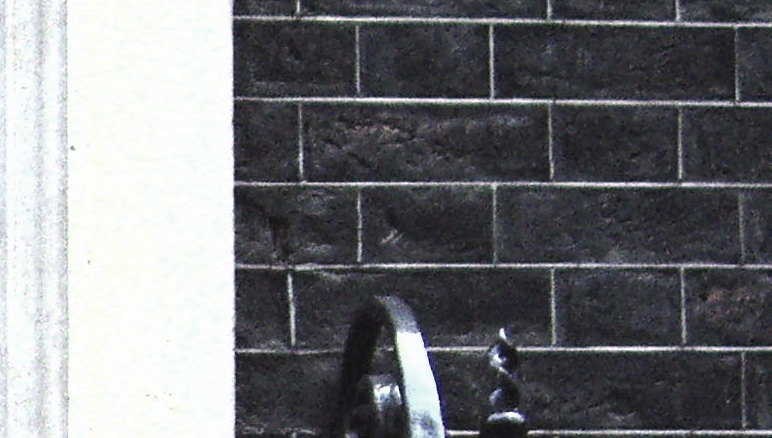
Ask most property managers what tuckpointing is and they’ll tell you it’s the process of repairing mortar joints in brick. Ask a mason in London and you’ll get a different answer entirely. The word means something specific, it describes a technique that has nothing to do with repair, and the confusion between the two has real consequences when you’re approving scope of work on a multi-unit building.
The Original Meaning: A Decorative Technique
Tuckpointing originated in England in the late 18th century as a decorative masonry technique, not a repair method. The goal was to make ordinary brick construction look like something far more expensive: gauged brickwork.
Gauged bricks, also called rubbers, were bricks made slightly oversized, fired to a fine red finish, and then individually cut or abraded by hand to precise dimensions. When laid with thin joints of white lime mortar, the result was brickwork of exceptional refinement. Fine red brick, fine white lines. It was expensive and slow, and it was the mark of premium construction in Georgian England.
Tuckpointing was a way to fake it. Ordinary, unrubbed bricks were laid in a mortar tinted to match the brick face itself, making the real joints nearly invisible. Before that mortar set, the mason would press a thin fillet, typically white pipe clay or lime putty, into a groove centered on the joint. The result from a distance: the visual impression of gauged brickwork, achieved with common materials at a fraction of the cost.
This is tuckpointing in its original, precise sense. Two contrasting colors of mortar. One matches the brick. One creates an artificial fine joint line. It is a cosmetic technique applied to new construction, not a repair applied to old construction.
Where the Term “Tuck” Comes From
The word derives from an older, simpler version of the same illusion. Before the two-color technique was developed, masons would draw a thin line into flush-finished mortar before it hardened, leaving a shallow groove but not filling it. That drawn line was called a “tuck.” The groove suggested a fine joint without requiring a second mortar color. The later, more refined technique that actually filled the groove with contrasting material became known as tuckpointing, building on the same vocabulary.
An Irish variation called “wigging” reverses the sequence entirely: the white ribbons are laid first, then the surrounding mortar is filled and colored to match the brick. Same visual effect, different order of operations.
How the Term Changed in America
In the United States and Canada, “tuckpointing” drifted away from its original meaning over the course of the 20th century. American masons began using the term to describe mortar joint repair, the process of removing deteriorated mortar and replacing it with fresh material. Technically, this is repointing. In practice, most American contractors, property managers, and building owners use tuckpointing and repointing interchangeably.
This matters because the three terms that get confused actually describe three distinct operations:
- Pointing: Finishing mortar joints in newly laid masonry. Part of original construction. The mason strikes or tools the fresh mortar to a clean profile before it cures.
- Repointing: Removing deteriorated mortar from existing joints, typically to a depth of 3/4 inch or more, and packing in fresh mortar. A repair operation on existing masonry.
- Tuckpointing (original definition): Applying a contrasting fine fillet of material to the face of a joint to create the visual impression of a thinner joint. A decorative technique, not a structural repair.
When an American contractor’s proposal says “tuckpointing,” they almost always mean repointing. When a British contractor says it, they mean the decorative two-color technique. Understanding which is being proposed matters when you’re reviewing scope of work for a commercial building.
Why the Confusion Has Practical Consequences
When an HOA board approves a tuckpointing contract without understanding what the scope actually entails, several things can go wrong.
The most common is inadequate joint depth. Proper repointing requires removing mortar to a minimum depth of 3/4 inch before repacking. Some contractors rake shallowly and apply a thin skim of new mortar over the surface of the old joint. This fails quickly because the thin new material doesn’t bond adequately and cracks away within a few seasons. The joint looks repaired on the day of completion. It isn’t.
A second issue involves mortar specification. The mortar used in repointing must be compatible with the existing masonry, specifically with respect to hardness. Older Chicago brick, particularly pre-1920 construction, was laid with lime mortar. Lime mortar is softer and more flexible than the brick. Portland cement mortar, which became standard in mid-20th century construction, is harder than many historic bricks. If Portland cement mortar is used to repoint soft historic brick, the mortar becomes the rigid element in the wall. Thermal expansion and freeze-thaw cycling then stresses the brick face rather than the joint, and the brick spalls. The joint is intact. The brick face is not.
Understanding that “tuckpointing” on a proposal means repointing, and then asking the right questions about joint depth and mortar specification, protects the building and the budget.
What Proper Repointing Looks Like on a Commercial Building
For a multi-unit residential building or commercial property, a thorough repointing assessment starts with a visual inspection and, on significant historic properties, a mortar analysis. The analysis identifies the existing mortar composition so the replacement can be matched in strength and porosity, not just color.
Joint raking should be mechanical, not chemical. Power tools remove old mortar cleanly without the acid damage that some contractors use as a shortcut. Joints are cleaned to depth, blown clear of dust, dampened, and packed with fresh mortar in lifts. The mortar is tooled to match the original joint profile, whether flat, slightly concave, or weathered. On historic buildings, a lime-based mortar is almost always the correct specification.
Arrow Masonry custom-blends mortar on every commercial project to match the existing joints in both color and composition before work begins. The goal is for repaired areas to be indistinguishable from original construction.
A Note on the Decorative Technique
True tuckpointing in the English sense does still exist, primarily in historic preservation contexts. Buildings constructed with the original two-color technique occasionally need maintenance: the fine white fillet weathers and falls out over time, and the underlying bedding mortar can be left exposed. Restoring it properly requires a mason who understands the original technique, which is considerably rarer in the United States than standard repointing work.
If you have a building with decorative fine white joint lines that don’t appear to align with the actual brick joints, you may have original tuckpointing. That’s a different repair specification than standard repointing, and it should be treated accordingly.
Sources
- Conway, H. and Roenisch, R. (2004). Understanding Architecture. Routledge.
- Hunt, R. and Suhr, M. (2008). The Old House Handbook. Frances Lincoln.
- National Park Service. (2019). Preservation Brief 2: Repointing Mortar Joints in Historic Masonry Buildings. U.S. Department of the Interior.
- Society for the Protection of Ancient Buildings. (2002). SPAB Technical Pamphlet 5: Pointing Stone and Brick Walling.
- Defence Estates, Ministry of Defence. Walls: Repointing Brickwork. British Government Technical Guidance.