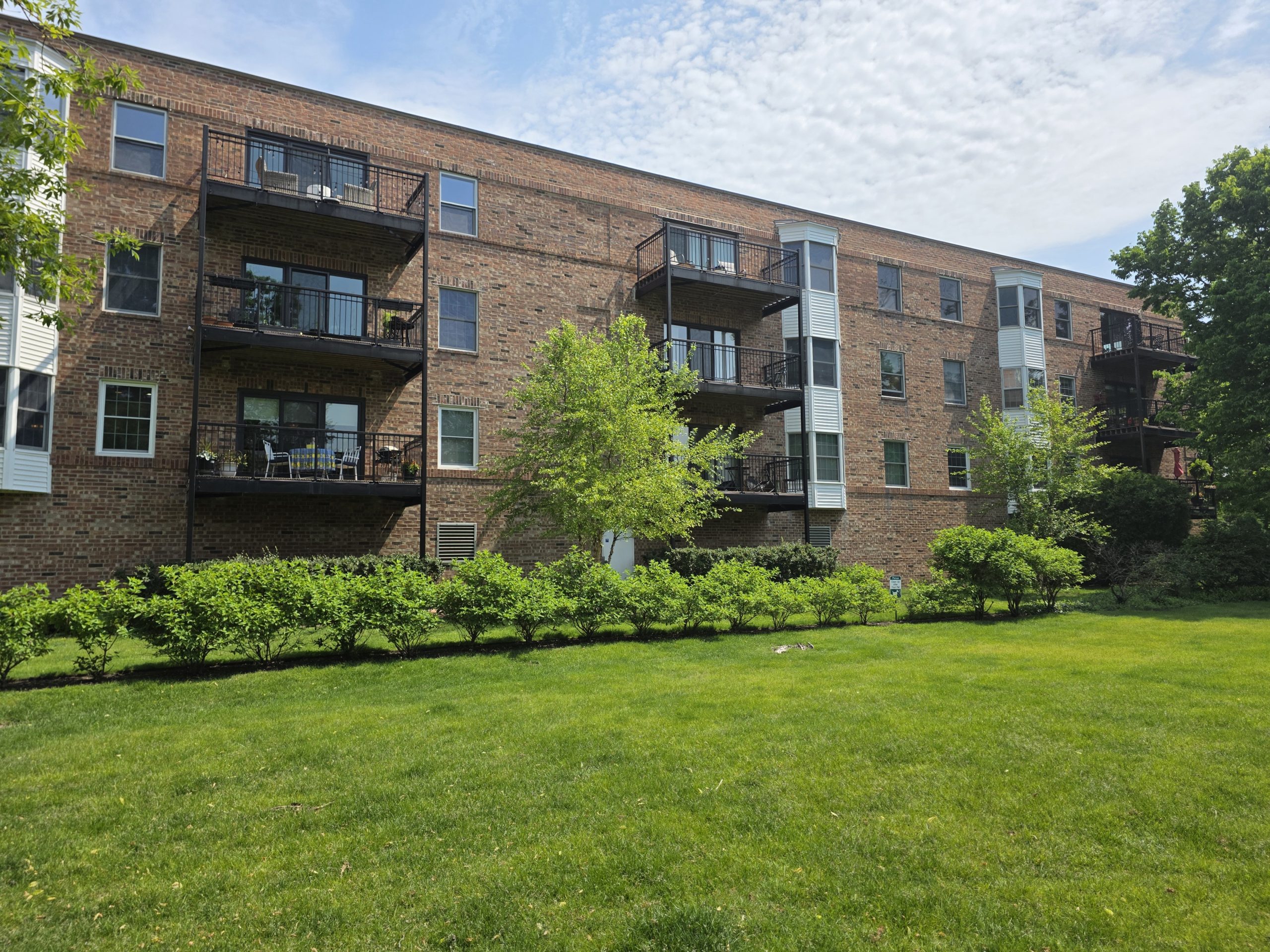
Commercial Tuckpointing in Kenilworth
Mortar joints reach the 15-to-20-year retreatment interval well before deterioration becomes visible at ground level. As joints deteriorate, water infiltrates the wall assembly and damages sheathing, insulation, and framing long before visible failure appears at the surface. Arrow grinds each joint to a minimum three-quarter-inch depth before packing new mortar and color-matches every batch from a physical sample taken against the existing wall.
Tuckpointing ›
Matching Replacement Brick to the Original Building
Damaged brick almost always traces back to water passage through failed mortar joints nearby, so the source and the symptom get treated together. Matching replacement brick is the harder half of the repair: brick from manufacturers no longer in production is sourced through salvage yards and regional brickyards, then hand-selected so face color, texture, and dimension read continuous with the original wall. Arrow tuckpoints the surrounding joints as part of every brick replacement so the repair reads as one restored section, not a visible patch.
Brick Repair ›
Full-Envelope Masonry Restoration Prioritized by Water-Entry Risk
Full facade restoration coordinates tuckpointing, brick replacement, lintel work, stone repair, and caulking on the same building under one written scope. The assessment covers mortar joints, brick and stone faces, lintels, sills, coping stones, parapet caps, flashing, and roof-to-wall transitions. Priorities are assigned by water-entry risk and structural urgency, so condo boards and property managers can fund critical work now and budget deferrable work over the next twelve to twenty-four months. Every scope includes a written specification suitable for lender review, insurance documentation, and reserve-study updates.
Masonry Restoration ›
Lintel Replacement Before Rust Expansion Fractures the Brick Above
Every masonry window and door opening is supported by a lintel that carries the brick load above it. Arrow replaces failed lintels before the deterioration reaches the surrounding masonry; at the point of surface failure, a lintel replacement becomes an opening rebuild. Where original lintels can be preserved on historic buildings, Arrow coordinates rust removal, primer application, and reinstatement rather than automatic replacement.
Lintel Replacement ›
Limestone, Cast Stone, and Sandstone Facade Restoration
Restored stone should read as continuous with the original facade, not as a visible patch. Arrow handles both the stone repair and the surrounding masonry integration so restored sections read as continuous with the original facade. Dutchman repairs, pinning, and consolidation are used where full replacement is unnecessary; matched replacement stone is sourced from regional quarries and salvage yards when replacement is required.
Stone Restoration ›
Chimney Repair on Multi-Family Apartment and Condo Properties
Chimney scope is based on what the chimney actually needs, not a standardized package: crown, cap, joints, flashing, and full rebuild are quoted separately. Arrow handles crown repair and replacement, chimney cap installation, tuckpointing, flashing repair, and full chimney rebuilds. Chimney base flashing is inspected on every scope, not just the crown and joints.
Chimney Repair ›
Panel Brick Repair on Apartment Complexes and Commercial Facades
Panel brick construction uses two-to-four-inch thin brick applied to a concrete or steel frame, with an air cavity behind the panel. Arrow uses stainless-steel through-bolt anchors on panel repairs for a service life of 50 years or more, and preserves the air cavity and weep holes that panel systems require to drain properly.
Panel Brick Repair ›