Limestone & Stone Facade Restoration · Since 1993
Stone Restoration Limestone, Brownstone, and Decorative Stone
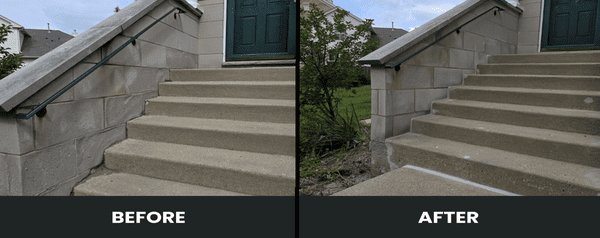
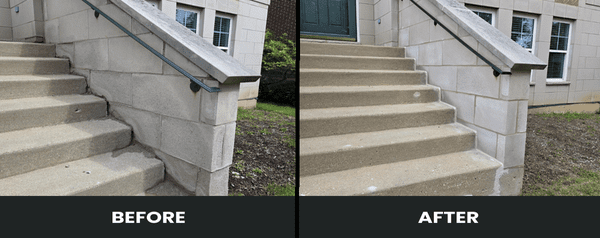
Limestone and decorative stone require different handling than brick. Arrow repairs cracks, replaces deteriorated sections, and repoints stone joints with mortar matched to the original material.
The Basics
Historic Stone Restoration Services for Chicagoland Facades
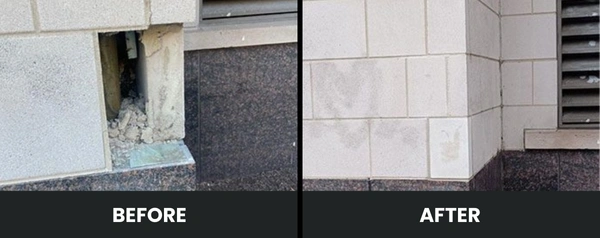
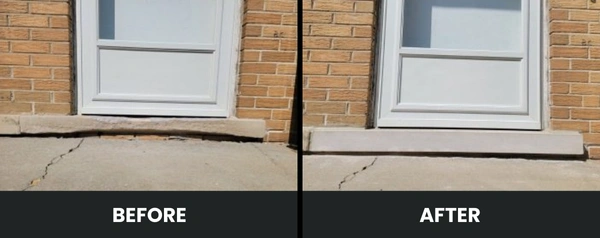
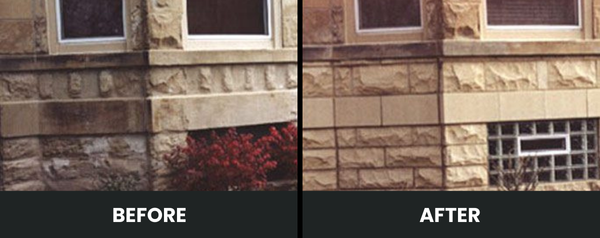
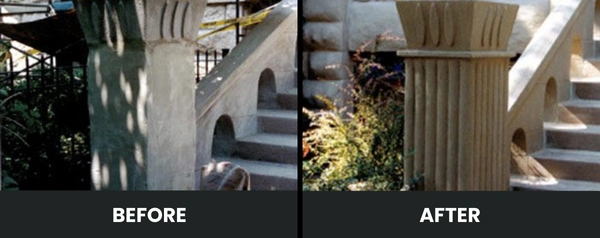
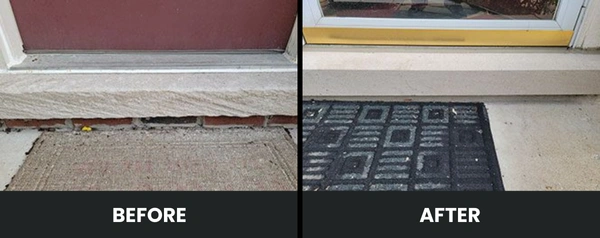
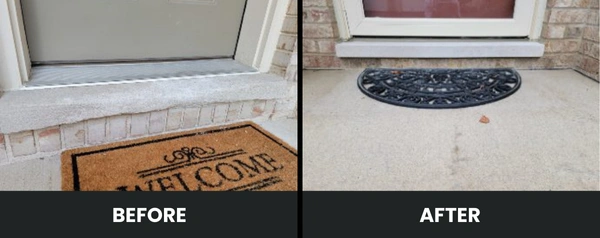
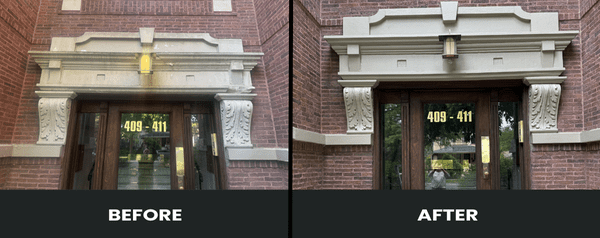
Arrow's stone restoration service performs specialized repair, patching, and consolidation of decorative and structural stone elements on aging masonry buildings. Arrow works with natural materials including Indiana limestone, sandstone, and granite, executes precision Dutchman repairs (inserting matching stone patches into damaged sections), uses specialized stone-patching compounds, and applies breathable, non-filming water repellents. This work restores classic Indiana limestone accents, sill blocks, and ornate decorative entryways found across historic Cook and Lake County properties, plus DuPage County landmark buildings.
Stone deterioration accelerates in the Midwest climate. Chicago's approximately 100 freeze-thaw cycles per year, driving lake-effect precipitation along the North Shore, and de-icing chemical exposure at grade produce combined surface erosion, delamination, cracking, and joint failure on soft-material stones like limestone and sandstone. Cast stone from 1920s-1960s commercial construction deteriorates faster than natural stone and typically shows delamination or full-section failure at the fifty-year mark.
Arrow is licensed, insured, and bonded for commercial stone restoration throughout the Chicago metro, backed by over fifty years of combined masonry restoration expertise across the founding team. Heritage-appropriate lime mortars, breathable silane/siloxane repellents, and matched replacement stone are specified for every project so the restored section reads as continuous with the original facade rather than as a visible patch.
The Work
Arrow's Standards for Every Commercial Stone Restoration Project
Stone material identification is the prerequisite to every scope. Limestone and cast stone are alkaline and cannot tolerate acid cleaning; marble is acid-etch susceptible; sandstone can delaminate along bedding planes; granite is durable but requires specific mortar composition. Arrow identifies the stone material before selecting any cleaning method, mortar, or repair technique.
Dutchman repair is preferred over full replacement when a damaged section is localized. Arrow inserts precisely-cut matched stone into the damaged section and sets it with matched mortar. Correctly executed Dutchman repair is nearly invisible on the finished facade and preserves the original stone rather than replacing it wholesale.
Mortar and repellent composition are matched to the stone type on every project. Portland-heavy mortar traps moisture behind soft historic stone and accelerates delamination; film-forming sealers over porous stone trap water inside the material and cause spalling from within. Arrow specifies lime-based mortars and breathable non-filming silane/siloxane repellents on historic buildings.
Get a Free EstimateCustom Mortar Matching
Color-sampled and blended for every project before work begins.
Written Scope
Every job includes a written specification before work starts.
Job-Specific Warranty
Every contract includes a written guarantee on the work.
Warning Signs
Common Stone Problems We Repair
Surface Erosion and Weathering
Loss of surface material from acid rain, de-icing chemicals, and freeze-thaw cycling. Erosion accelerates once started because the exposed interior of the stone absorbs water more readily than the original weathered face.
Spalling and Delamination
Face sections separating from the stone body, common on cast stone from the 1920s through 1960s and on sandstone along bedding planes. Once delamination begins, it progresses quickly and is not repairable through surface treatment.
Cracks Through the Stone Body
Vertical, diagonal, or radiating cracks through structural stone units. Cracks admit water directly and, if left, cause the stone to fail structurally over time. Small cracks can be pinned and consolidated; larger cracks require replacement.
Failed Joint Mortar
Joint failure between stone units. On stone facades, the correct mortar composition is softer than the stone. Using standard hard mortar on soft stone causes the stone to spall at the joint edges instead of the mortar wearing first.
Previous Improper Repairs
Concrete patches, hard cementitious repairs, wire mesh reinforcement, or sealants applied over failed stone. Improper repairs almost always accelerate deterioration and complicate future restoration. Arrow removes and replaces prior improper repairs as part of restoration scope.
Our Process
The Arrow Stone Restoration Process: Three Phases
Every Arrow stone restoration project runs through three phases. The material identification and mock-up phase is where projects are protected from irreversible mistakes; using the wrong cleaning chemistry or mortar composition on soft stone causes damage that cannot be undone.
-
01
Phase 1: Stone Identification and Mock-Up
Each stone element is identified by material type (Indiana limestone, sandstone, granite, cast stone, marble) and inspected for weathering, cracks, delamination, joint failure, and prior improper repairs. Cleaning method, mortar color, and repair technique are proofed on an inconspicuous area before full-scale work begins. Mock-ups protect the building from irreversible mistakes and provide the client an approval opportunity before commitment.
-
02
Phase 2: Consolidation, Dutchman Repair, or Matched Replacement
Where stone surfaces are friable but structurally intact, breathable consolidants are applied to stabilize the material without sealing it. Where damage is localized, Dutchman insertion of matched stone is used to preserve the original material. Full replacement with matched stone is reserved for structural failure that other methods cannot address, and matched material is sourced from regional quarries before removal begins.
-
03
Phase 3: Joint Repointing and Breathable Water Repellent
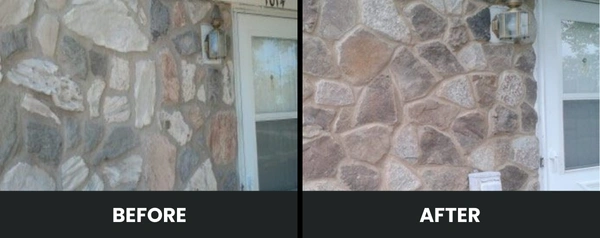
Failed joints are ground out and repointed with mortar composition matched to the stone type (softer lime-based mortars on historic and pre-1930 stone, appropriately weaker Portland-lime mixes on mid-century construction). Breathable, non-filming silane/siloxane water repellent is applied on cured work to slow the deterioration cycle without trapping moisture behind the stone.
Why It Matters
Stone Deterioration Progresses Faster Than Most Owners Expect
Early Restoration Costs a Fraction of Replacement
Limestone loses surface material to acid rain, de-icing chemicals, and freeze-thaw cycles. Once surface erosion begins, water penetrates the stone itself and accelerates from within. Historic limestone details, coping stones, and sills are often irreplaceable. Buildings where stone deterioration is caught at the surface-erosion stage can be restored in place.
Late-Stage Damage Requires Full Section Replacement
Buildings where water has been entering for years often require full section replacement, which is significantly more expensive and harder to match. Arrow identifies the deterioration stage during initial inspection and provides an honest assessment of what restoration can achieve versus what will need replacement.
We Start With What Actually Needs Fixing
Large projects get broken into priority lists. Critical work comes first. Arrow does not write the biggest possible scope to maximize the invoice. The written scope explains what is essential now and what can wait.
Lifespan & Longevity
How Long Does Stone Restoration Last?
Properly restored stone lasts fifty to one hundred years or more. Natural stone on historic buildings that has been consolidated correctly and pointed with matched lime mortar routinely lasts several centuries. The determining factor is the appropriateness of the restoration technique to the material type, not the age of the underlying stone.
Cast stone is the exception. Even correctly restored cast stone from the 1920s through 1960s often deteriorates faster than natural stone because the manufacturing process left the material more porous and less freeze-thaw resistant than natural limestone. Cast stone restoration should be paired with breathable water repellent to slow the deterioration cycle.
The single most common cause of premature stone restoration failure is inappropriate material selection: hard cementitious mortar on soft stone, film-forming sealers over porous stone, or acid cleaning of alkaline stone. Arrow prevents this failure mode by matching every step of restoration to the specific stone material.
Common Questions
Stone Restoration FAQs
Can heavily eroded limestone be repaired, or does it have to be replaced?
Surface erosion can usually be addressed through cleaning, consolidation, and breathable water repellent application. Once erosion has progressed to structural loss (deep pitting, delamination, cracking through the stone body), targeted repair through pinning or Dutchman insertion becomes necessary. Full replacement is reserved for stones where structural integrity has failed.
What is a Dutchman repair?
A Dutchman repair is the insertion of a matched piece of stone into a section of damaged stone, cut to fit precisely and set with matched mortar. It preserves most of the original stone while replacing only the damaged portion. Correctly done, a Dutchman repair is nearly invisible on the finished facade.
Can Arrow match ornamental carved stone?
Yes, for most common patterns. Custom carving is done by stone specialists Arrow coordinates with, using matched material. Historic ornamental work often requires photographic reconstruction of missing sections; Arrow provides that documentation as part of the scope where original documentation is unavailable.
Why does stone need different cleaning than brick?
Stone types react differently to cleaning agents. Acid cleaning that removes iron staining from brick will etch limestone. Sandblasting that could remove paint from concrete would destroy the outer surface of any soft stone. Aggressive power washing that works on granite would erode sandstone. Every stone type has a correct cleaning method and several methods that would damage it.
How long does stone restoration take?
Small residential projects run one to three weeks. Full facade restoration on historic commercial buildings routinely takes two to six months of active work. Historic restoration on landmarked buildings can extend across multiple seasons due to review requirements and specialty material sourcing.
What Clients Say
Read All Reviews"Arrow did tuckpointing on our 40-unit building in Evanston. The mortar match was excellent. You honestly cannot tell where the old work ends and the new work begins. That was the most important thing for our board."
"We had a city citation and needed documentation fast. Arrow assessed the building, gave us a clear scope, and completed the work on schedule. The inspector signed off without any issues."
"I manage six buildings. Arrow is the only masonry contractor I call. They tell me what the building needs, not the most expensive thing they can do. That matters a lot when you're managing association budgets."
Ready to Get Started?
Free estimates for all projects. We serve property managers, condo associations, and building owners across Chicagoland.